
Data Objects
Manage the objects that are in your repositories
🗄️ Data Objects Overview
Data objects are discrete pieces of data imported into ARPIA from various sources, forming the building blocks for all data operations. The Data Objects interface allows you to manage repositories, tables, views, functions, and automated triggers efficiently.
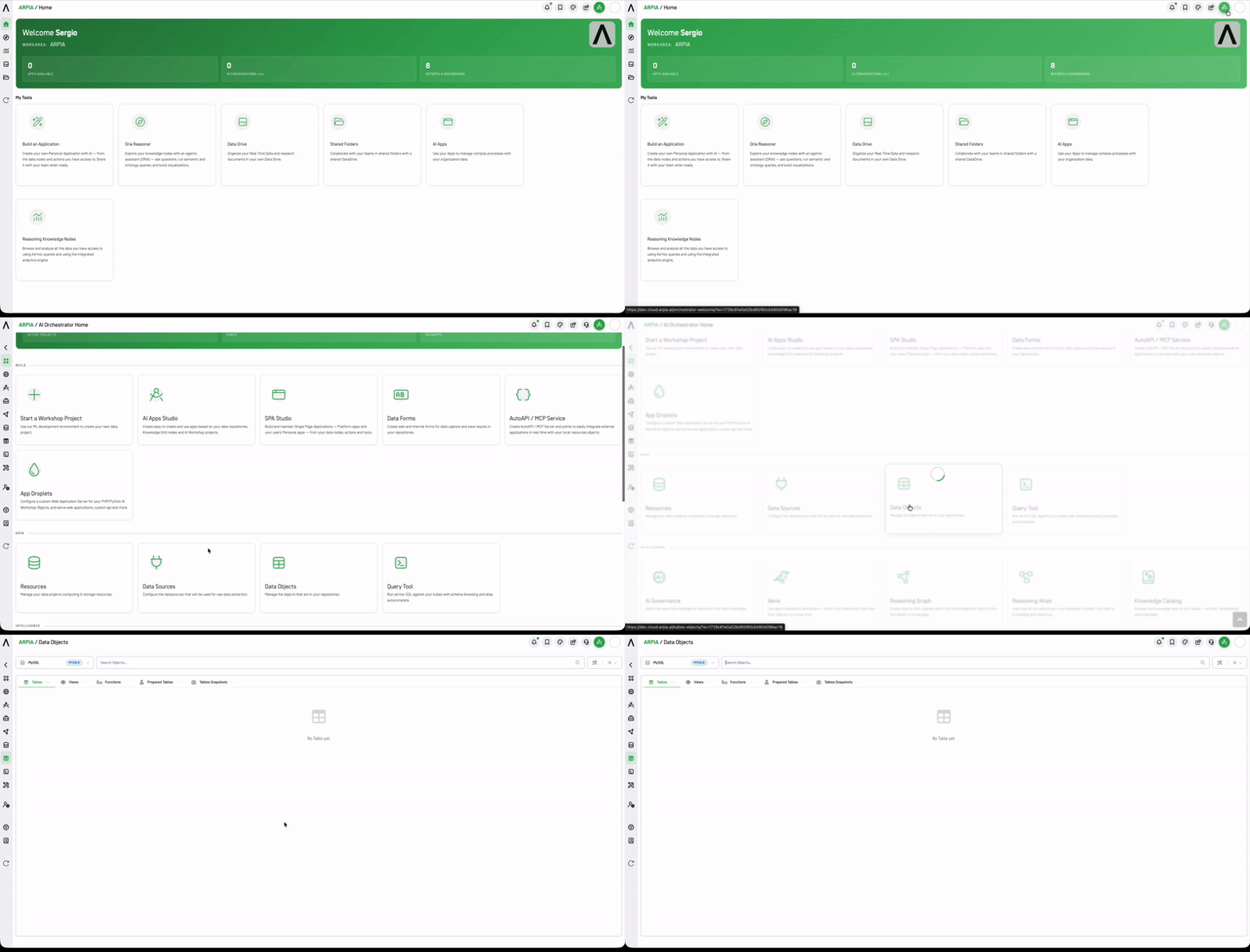
Side menu — Workarea Usage
🎯 Interface Overview
Repository Selection - Choose from your available repositories (e.g., education_registry) or create a new repository.
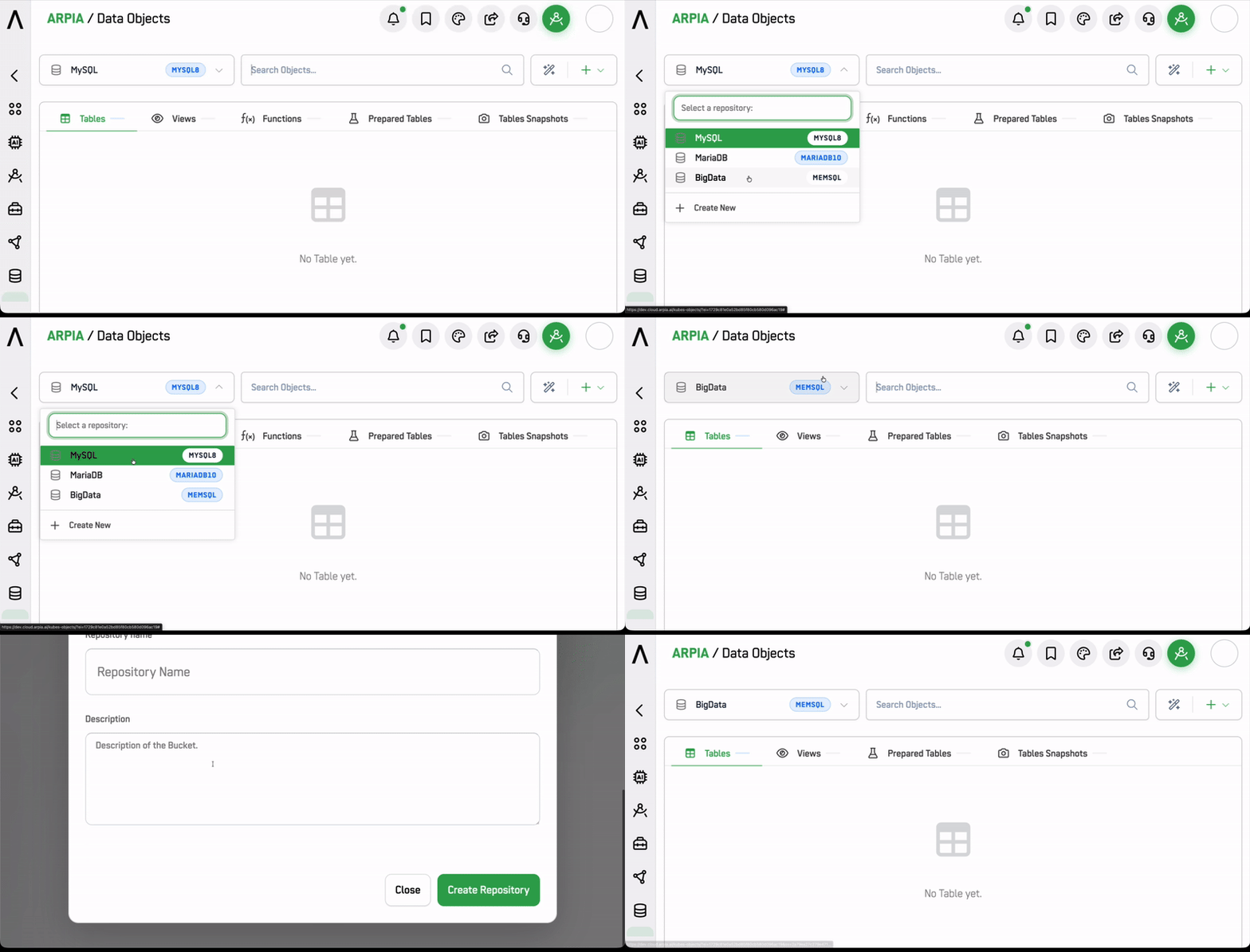
Side menu — Workarea Usage
Search - Quickly filter objects using the search bar
Quick Actions - ARPIA ORIA ASSISTANT, TABLE, VIEW, TRIGGER, FUNCTION buttons for rapid creation
⚙️ Key Features
Tables
Import and manage your data in structured tables. Each table displays:
- Row Count
- Collation settings
- API usage metrics (Last 3 Months)
- Creation timestamp
What you can do with tables: - View Object - Inspect columns, indexes, sample data, and the SQL query used to create the table
- Edit Data - Import from CSV/TXT files, add new rows, and edit existing data with an interactive preview
- Import - Bulk import data from CSV/TXT files with options for handling duplicates and date formats
- Table Data Profile - Analyze data quality with statistics, charts, and categorical analysis for each column
- See Token - Generate API access token for programmatic table access
- Design Object - Add, edit, or delete fields and manage table structure
- Duplicate - Create empty (structure only) or complete copies with compression options
- Create Snapshot - Generate compressed backup (optimized for querying or long-term storage)
- Create Knowledge Node - Build a Knowledge Node using this table as the primary data source
- Add Trigger - Automate actions on table events (INSERT, UPDATE, DELETE)
🔗 Learn more about Data Object Actions
Views
Views are saved queries that behave like virtual tables. Rather than storing their own copy of the data, they dynamically retrieve and present data from one or more underlying physical tables each time the view is queried.
Views are created by writing the SQL query directly (View Name + SQL View editor — no visual builder). After saving, ARPIA may automatically optimize the submitted SQL for performance.
Common uses:
- Simplify complex or frequently repeated queries
- Combine related data from multiple tables into one structure
- Expose only selected columns or rows
- Standardize business logic in a single, reusable definition
- Provide a controlled abstraction layer over the underlying schema
Example: A
customer_summaryview combines the customer, subscription, and billing tables into a single easy-to-query structure containing customer name, plan, account status, and current balance.
Functions
Create custom SQL routines (functions or stored procedures) that encapsulate reusable logic for calculations, transformations, and multi-step operations.
🔗 Learn how to create functions
Triggers
Automate actions when table events (INSERT, UPDATE, DELETE) occur.
Available trigger types:
- Replication - Record and track data changes for analysis
- Notification - Send alerts and trigger workflows based on data changes
- WebHook - Send data to external systems via HTTP POST in JSON format
- Audit Log - Maintain comprehensive change logs for compliance
- Manual Trigger - Execute custom SQL code for specialized automation
Configure triggers with conditions and filters to fire only when specific criteria are met.
🔗 Learn how to create a trigger
Prepared Tables
Specialized data objects used in Reasoning Flows for machine learning models.
Tables Snapshots
Create compressed copies of your tables in two formats:
- Compress Only - Faster to create, optimized for querying data
- Compressed Snapshot for Backup - Comprehensive format for backups and long-term archival
Arpia Oria Assistant
Generate tables or views by describing your requirements in plain language. The Arpia Oria Assistant analyzes your needs in context of existing repository objects.
Note: To use the Arpia Oria Assistant, you must enable AI in the workarea.
Updated 2 months ago